GFL Boss Claims Credit For Ending TUC’s Monopoly Over Organised Labour
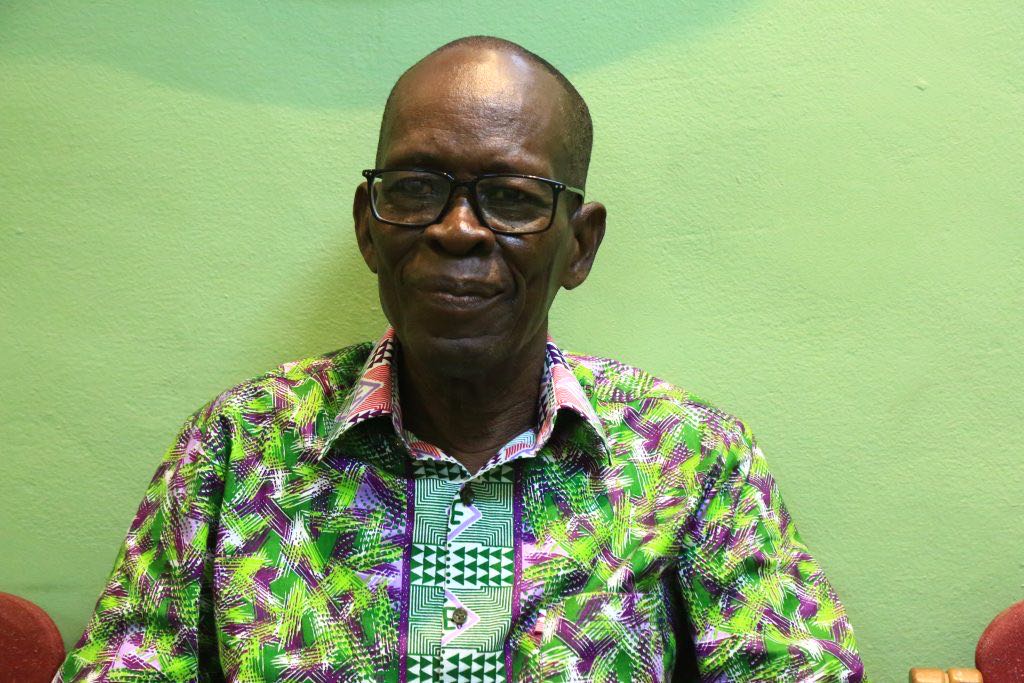 The Secretary-General of the Ghana Federation of Labour (GFL), Abraham Koomson, has claimed that his campaign with the Textile Union was instrumental in ending the Trades Union Congress (TUC)’s monopoly over organised labour in Ghana.
He said the struggle paved the way for the emergence of multiple labour organisations and expanded workers’ opportunities to organise and negotiate for better conditions of service.
Speaking on Ahotor FM, Mr Koomson said the Industrial Relations Act of 1965 gave the TUC exclusive recognition to represent workers, largely because of its historical role in Ghana’s independence struggle.
However, he alleged that some TUC leaders abused the arrangement and failed to adequately protect workers’ interests, even as businesses struggled and companies shut down.
Mr Koomson said his dissatisfaction deepened as he rose through the ranks of the TUC and began raising concerns about workers’ conditions, only for the leadership to allegedly pay little attention to his demands.
“I realised that the leadership was not representing the interests of workers,” he said, explaining that the experience motivated him to intensify his campaign for reforms in Ghana’s labour relations system.
Mr Koomson recounted that efforts to establish independent labour organisations outside the TUC structure began before the legal reforms that opened up the labour movement.
He said the Textile Union was registered in 1993 despite resistance to the establishment of unions operating independently of the TUC, which at the time had 17 national unions.
According to him, the Textile Union subsequently applied to join the TUC as its 18th national union but was rejected.
He alleged that the leadership considered him troublesome and feared his presence would create problems within the organisation.
The rejection, he said, prompted him and his colleagues to intensify their campaign against the legal restrictions that limited workers’ freedom to organise outside the TUC.
Mr Koomson attributed the eventual passage of the Labour Act, 2003 (Act 651), to the sustained efforts of the Textile Union and other labour groups seeking greater freedom of association.
The law introduced a new framework for labour relations in Ghana, creating opportunities for a broader range of worker organisations to operate and pursue collective bargaining rights.
He argued that the reforms helped professional and occupational groups, including the National Association of Graduate Teachers (NAGRAT), the Pre-Tertiary Teachers’ Association of Ghana (PRETAG), nurses and civil servants, to organise and negotiate over their working conditions.
“If not for Abraham Koomson and his Textile Union, NAGRAT wouldn’t have been there, PRETAG wouldn’t have come, the nurses couldn’t have had the certificate to negotiate, and civil servants could not negotiate.
I did it; I led that struggle to break the monopoly because of the way they were behaving,” he said.
He also cited pressure from the International Labour Organization (ILO), arguing that its conventions opposed the restrictive legal framework and contributed to calls for changes that would allow other labour organisations to operate.
The GFL Secretary-General further alleged that his campaign to challenge the TUC’s dominance exposed him to threats and intimidation.
He claimed that his vehicle was hit on the motorway and somersaulted, adding that those responsible believed he had died and subsequently visited hospitals in search of him.
Mr Koomson did not provide further details of the alleged incident in the account of his remarks.
Koomson acknowledges challenges from proliferation of unions
Despite defending the reforms that opened up the labour movement, Mr Koomson acknowledged that the proliferation of unions had also created challenges.
He estimated that Ghana currently has nearly 200 unions, suggesting that the growing number of labour organisations was not necessarily a positive development.
However, he blamed the TUC’s approach to independent labour groups for contributing to the situation, arguing that a more accommodating attitude could have prevented the emergence of multiple labour centres.
He said the TUC had since regretted its decision not to admit the GFL as an affiliate, adding that he subsequently mobilised other groups to establish the federation as Ghana’s second labour centre.
Mr Koomson maintained that the emergence of multiple labour organisations in Ghana was the outcome of a deliberate struggle to expand workers’ freedom of association and strengthen collective representation.
He insisted that the history of labour pluralism in the country could not be told without recognising the role he and the Textile Union played in challenging the TUC’s former dominance.
-Overseeronline.com













Post Comment