GMTF: No Family Should Be Crushed By The Cost Of Chronic Illness
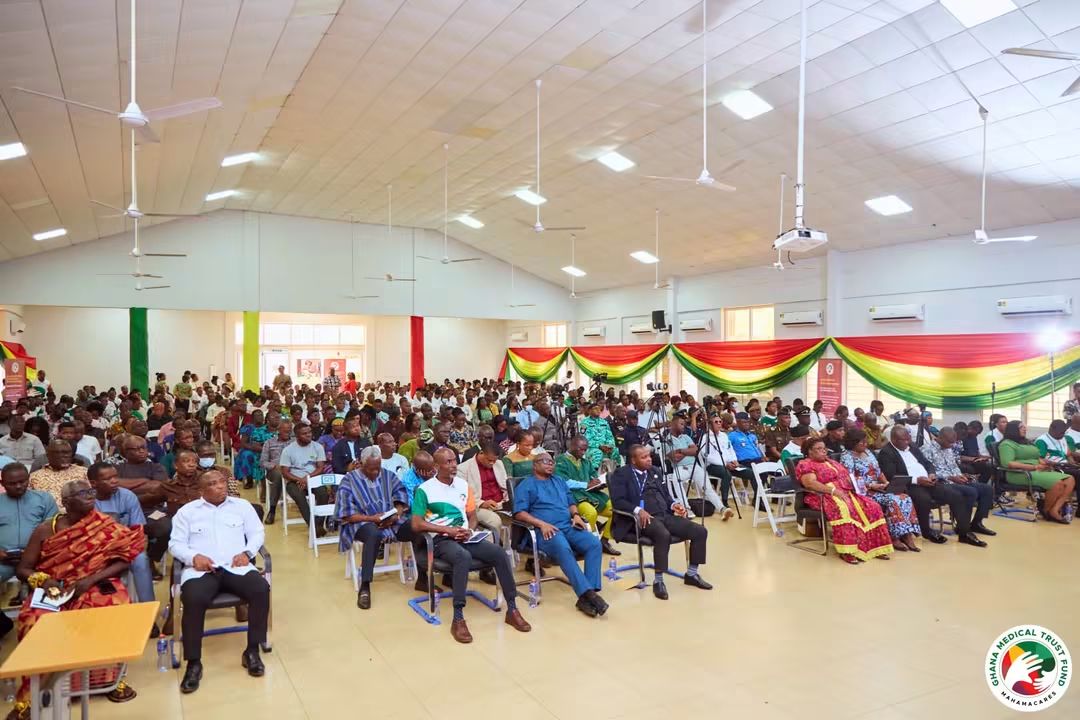 The Ghana Medical Trust Fund (GMTF) has intensified its drive to protect families from the crippling cost of treating chronic diseases, taking its specialised healthcare campaign to the Volta Region with a call for stronger collaboration to ensure that financial hardship does not stand between patients and life-saving treatment.
At a town hall meeting in Ho, the Fund brought together traditional authorities, faith-based organisations, health professionals, students, community members and other stakeholders to deepen public understanding of its mandate, the support available to eligible patients and the procedures for accessing assistance.
The engagement formed part of the Fund’s nationwide public education campaign to ensure that people living with cancer and other chronic Non-Communicable Diseases are aware of available support and are not left to navigate the financial burden of treatment without assistance.
The Chancellor of the University of Health and Allied Sciences (UHAS), Prof Lydia Aziator, described the Fund as a significant intervention for patients and families struggling with the high cost of managing chronic illnesses.
She said the financial pressure associated with such conditions could prevent patients from seeking timely medical attention, making the Fund’s interventions particularly important to households in need.
Prof. Aziator called for greater awareness of early detection, especially in the fight against breast cancer, urging women to seek medical attention promptly whenever they noticed unusual symptoms.
She also appealed to women diagnosed with cancer not to allow stigma, fear or public perception to prevent them from seeking treatment.
According to her, the availability of support through the GMTF offers hope to patients who might otherwise struggle to meet the cost of
specialised care.
The Volta Regional Minister, Hon. James Gunu, said the sensitisation exercise provided an important opportunity to educate residents on the Fund’s purpose and how eligible patients could benefit from its interventions.
He said the initiative was designed to support households overwhelmed by the cost of treating chronic diseases and improve access to quality healthcare.
Mr. Gunu noted that the region’s diverse healthcare needs required coordinated efforts by government institutions, healthcare professionals and community stakeholders to ensure that patients received the support they needed.
He, therefore, called on Metropolitan, Municipal and District Chief Executives (MMDCEs), civil society organisations and the media to help take the message to communities across the region.
He also urged healthcare professionals to assist patients in understanding and navigating the procedures for accessing support.
The Regional Minister emphasised the need for transparency and accountability in the management of the Fund, noting that financial openness was essential to sustaining public confidence.
He assured the GMTF delegation of the Volta Regional Coordinating Council’s readiness to support the public education campaign.
The Administrator of the GMTF, Adjoa Obuobia Darko-Opoku, said the visit was intended to bring the Fund closer to the people by providing accurate information about its mandate and how patients could access its support.
She explained that the Fund was established to help households facing financial difficulties in caring for relatives suffering from chronic non-communicable diseases.
However, she cautioned that financial assistance alone could not deliver the desired results if healthcare facilities lacked the equipment and infrastructure required to provide
“Even if people receive financial support, it will come to nothing if the health facilities do not have the needed equipment and infrastructure,” she said.
Ms. Darko-Opoku underscored the importance of strengthening the capacity of the Ho Teaching Hospital and the University of Health and Allied Sciences to support specialised healthcare delivery in the region.
She said access to treatment depended not only on patients being able to afford care but also on the availability of facilities and equipment capable of delivering the required services.
The Administrator appealed to political leaders, health professionals and other stakeholders to
work with the Fund to identify and reach families in need of assistance.
She said sustained public education was necessary to ensure that eligible patients understood the Fund’s mandate and the procedures for seeking support.
The Volta Region engagement forms part of the GMTF’s broader nationwide campaign to expand awareness of specialised healthcare assistance, strengthen stakeholder partnerships and improve access to treatment for people living with chronic non-communicable diseases.
-Overseeronline.com












Post Comment