Elon Musk Emerges As Biggest Loser In US Midterms
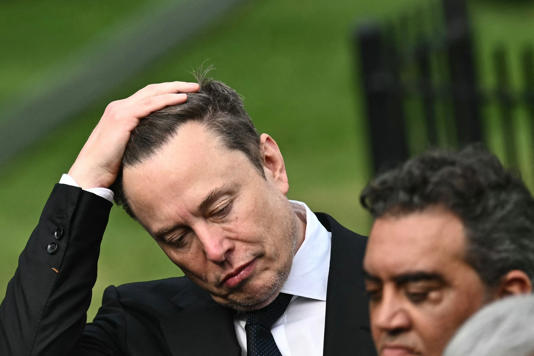 Democrats secured control of both the U.S. Senate and House of Representatives in the midterm elections, with Elon Musk, CEO of Tesla and SpaceX, emerging as one of the most prominent figures to suffer significant setbacks.
Foreign media outlets including Politico and NBC reported on the 4th (local time) that “Republican candidates backed by Musk suffered near-total defeats,” calling him “one of the biggest losers of the election, despite not being on the ballot.”
According to an analysis by the nonprofit Public Citizen, Musk donated approximately 445 million dollars (around 600 billion Korean won) to Super PACs during this election cycle, making him the largest contributor.
Most of the funds flowed into the America PAC, a Super PAC he founded, and the Senate Leadership Fund, which supports Republican Senate candidates.
Musk’s most heavily funded battleground was the Texas Senate race.
The state hosts SpaceX and Tesla headquarters and has been a Republican stronghold since 1988, with no Democratic senator elected since then.
Musk invested over 200 million dollars—roughly half his total donations—into the Texas race.
However, Democratic candidate James Talarico won by a 12 percentage points margin.
Even Texas Governor Greg Abbott, whom Musk actively supported, lost to Democratic challenger Gina Hinojosa.
This marks the first time a Democrat has won the Texas governorship since 1995.
The losses extended beyond Texas. Republican candidates backed by Musk’s America PAC in Senate races in Ohio, Michigan, and Maine all lost.
Notably, the defeat of Maine’s Susan Collins cost Republicans the Senate Appropriations Committee chairmanship, which oversees NASA and Department of Defense budgets.
SpaceX’s largest clients are U.S. government agencies, meaning the company could face abrupt changes starting next year.
Musk quipped on his social media platform X, “My election-interference space lasers apparently didn’t work this time,” in a self-deprecating joke.
Analysts predict Musk will face repeated challenges in his key projects next year.
Initiatives like the large-scale semiconductor factory TerraFab and data center construction require state cooperation, which may now be harder to secure.
Gina Hinojosa, the Texas governor-elect who pledged to temporarily halt new data center construction, asked during her campaign, “Will Texas be a place for its citizens, or a world for billionaires?” James Talarico, the Texas Senate-elect, declared in his victory speech, “We’ve sent a clear message to the world’s first trillionaire: Texas is not for sale.”
However, the Texas legislature remains Republican-majority, leaving uncertainty over whether the data center halt will materialize.
As data center projects in Texas face hurdles, Musk has revived his long-discussed plan for space-based data centers.
Markets reacted swiftly: pre-market trading on the 4th showed SpaceX shares down 3.6% and Tesla 3.5%. Additional pressure comes from potential congressional investigations. Democrats had previously vowed to probe Musk-related controversies if they gained majority control.
-MSN







Post Comment